

Roots blowers in the power plant application practice and future development outlook
A brief introduction to the basic working principle of the Roots blower and its application profile in the power industry.
Basic information and needs of power plants:
A brief description of the main equipment, production process and energy consumption of the power plant is given, and the demand for Roots blowers in the power plant is explained.
Practice of Roots blowers in power plants:
- Desulfurization and denitrification project: Roots blower as part of the conveying system, can provide stable air pressure and flow to ensure that the desulfurization and denitrification process is carried out smoothly.
- Waste heat recovery from boiler flue gas: Roots blowers enable heat to be effectively recovered by driving the flow of flue gas, improving energy utilization.
- Pneumatic ash removal system: Roots blower can generate enough air volume to blow the fly ash out of the furnace and into the ash storage, reducing environmental pollution.
- Wastewater treatment system: Roots blowers can provide a stable airflow to promote the wastewater treatment process and meet the requirements of environmental discharge.
- Cooling Tower Ventilation System: The Roots Blower can generate the proper wind speed in the cooling tower to speed up water evaporation and thus improve cooling efficiency.
Features and benefits of Roots blowers:
- Reliable and durable: Roots blower has the advantages of high temperature resistance and impact resistance, long service life and low maintenance cost.
- Easy to operate: Roots blower is simple to operate, easy to master, no need for professional and technical personnel to operate.
- Energy saving and consumption reduction: Roots blower has high working efficiency and low energy consumption, which is in line with the development trend of energy saving and emission reduction.
- Low noise: the Roots blower adopts advanced anechoic design, less noise during operation, which is conducive to improving the working environment.
Problems and challenges of using Roots blowers:
- Equipment selection: the working conditions of the power plant is complex, different types of blowers applicable conditions are different, how to choose the right equipment is the primary problem.
- Maintenance: The regular maintenance and overhaul of Roots blower is the key to keep it in good operating condition, how to establish a scientific maintenance system is the key.
- Technical support: Roots blower technology is updated faster, the professional quality of the technicians have high requirements, how to train and retain talent is also a challenge.
As an important auxiliary equipment, Roots blower plays an irreplaceable role in the power plant. First of all, the desulfurization and denitrification project is one of the necessary environmental protection facilities in the power plant, and the Roots blower plays a vital role in it. It can provide constant pressure and flow for the desulfurization and denitrification device, so that the soot can be effectively collected and filtered, and ultimately realize the purpose of clean combustion.
Secondly, in the flue gas waste heat recovery segment of the boiler, theRoots BlowerIt can also play an important role. By driving the flue gas flow, the heat can be fully recycled, effectively improving the energy utilization rate. In addition, in the pneumatic ash removal system, the airflow generated by the Roots blower can help the fly ash to be discharged from the furnace chamber and transported to a designated location for storage, reducing the impact on the environment.
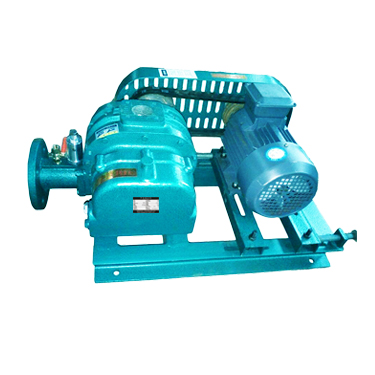
Roots blowers are equally suitable for wastewater treatment systems and cooling tower ventilation systems. The former can promote the circulation of wastewater by generating a stable airflow, which promotes the removal of pollutants; the latter can generate the appropriate wind speed in the cooling tower to accelerate the evaporation of water and improve the cooling effect.
Although Roots blowers have many advantages, there are also some shortcomings. First of all, equipment selection is often difficult because of the complexity of power plant conditions, different types of blowers for different conditions, it is particularly important to choose the right equipment. Secondly, regular maintenance and overhaul is vital to keep the Roots blower in good operating condition, but how to establish a set of scientific and reasonable maintenance system is a major problem. Finally, the technology of Roots blower is updated quickly, which requires a professional team to carry out technical support and research and development.
To summarize, Roots blowers play an important role in power plants and have a broad market prospect. With the continuous progress of technology, it is believed that in the future, Roots blowers will play a role in more application scenarios.


