

What is the meaning of Roots fan boost? Uncovering the principle and application of Roots fan boosting
Roots FansAs a common type of gas conveying equipment in industrial production, its role and principle in boosting pressure is the focus of attention of many industry technicians. Below, we will talk aboutRoots fan boostWhat exactly does that mean.
Roots fan boost, as the name suggests, refers to theRoots FansThe process of compressing low pressure gas to high pressure gas during operation. This type of equipment is widely used in industry, mainly due to its efficient and stable boosting performance.
realizeThe working principle of the Roots fanis the basis for understanding its boost function.Roots FansAdopting a pair of staggered impellers, the impellers rotate at high speed in the rotor, and through the mutual meshing of the impellers, the gas is inhaled from the inlet and discharged from the outlet after compression. In this process, the rotational speed of the impeller and the impeller clearance are the key factors affecting the boosting effect.
Roots FansThe boosting effect is closely related to its structural design. In order to improve the boosting efficiency, theRoots FansImpeller and rotor designs often feature special shapes and clearances, which ensure that the gas is compressed with as little energy loss as possible. In addition.Roots FansThe sealing performance is also an important factor in determining the boosting effect. Good sealing prevents gas leakage and improves compression efficiency.
Once again, the boosting capacity of Roots fans is affected by a variety of factors. First, the rotational speed of the impeller directly determines the speed of compressed gas, the higher the rotational speed, the more obvious the compression effect. Secondly, the pressure difference between the inlet and outlet is also a key factor affecting the boosting effect. When the pressure difference between the inlet and outlet is large, the Roots fan can compress the gas more effectively. In addition, the exhaust volume and exhaust temperature of the Roots fan will also affect its boosting capacity.
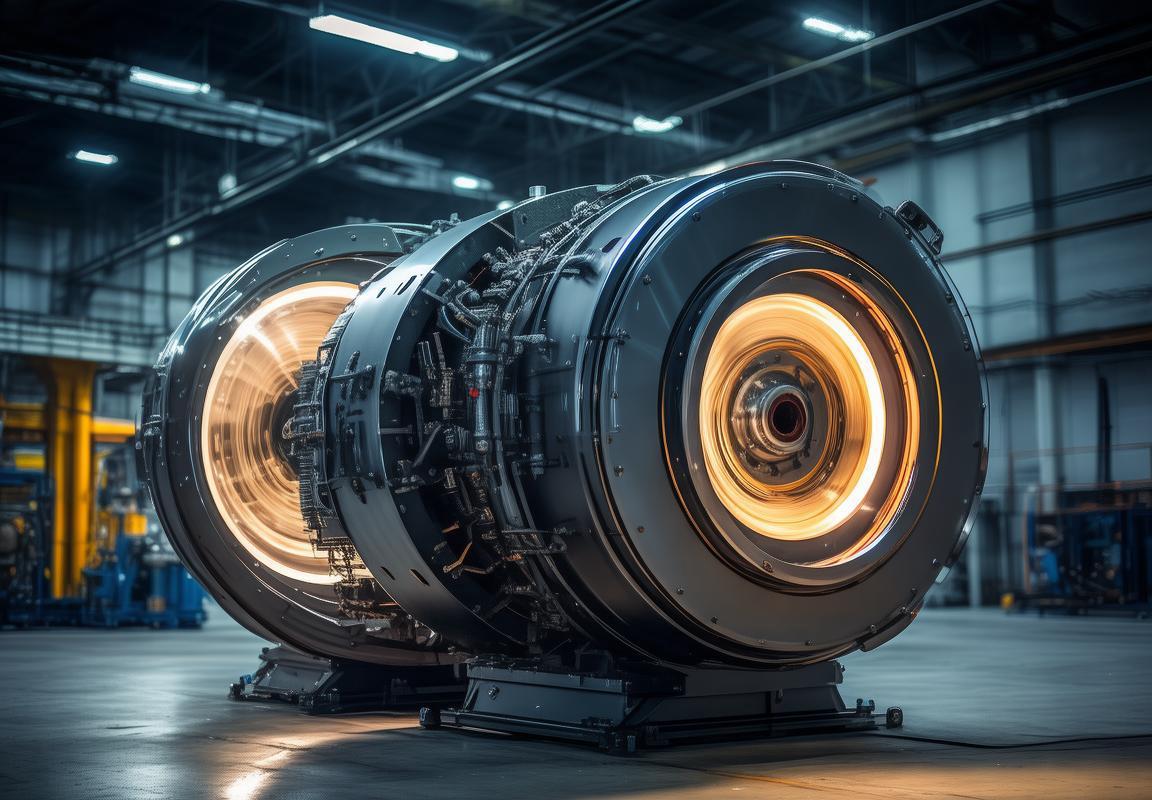
Practical applications.Roots fan boostThe effect can be evaluated by the following indicators: compression ratio, efficiency, exhaust volume and exhaust temperature, etc.. Among them, the compression ratio refers to the ratio of the inlet pressure to the outlet pressure, which directly reflects the uplift capacity of the Roots fan. Efficiency refers to the energy loss of the Roots fan in the compression process, the higher the efficiency, the less energy loss. The exhaust volume and exhaust temperature reflect the output capacity and operation status of the Roots fan respectively.
In order to improve the boost performance of the Roots fan, you can start from the following aspects:
-
Optimize the impeller and rotor design, improve the matching of impeller clearance and impeller shape, and reduce the energy loss.
-
Selection of high quality materials to improve the wear resistance of the Roots fan and prolong its service life.
-
Enhances sealing performance, reduces gas leakage and improves compression efficiency.
-
Reasonable selection of the operating parameters of the Roots fan, such as rotational speed, pressure difference between the inlet and outlet, etc., in order to achieve the best boost effect.
Roots fan boostIt is the process of compressing a low-pressure gas to a high-pressure gas, a process that involves a number of factors. By understandingThe working principle of the Roots fan, structural design and operating parameters, we can better optimize its boosting performance and improve its application in industrial production.


